
Linn County Residents Directory
The Linn County residents directory connects you to public records held by county offices in the Willamette Valley. Linn County sits in the heart of Oregon, with Albany as its county seat. Local departments keep property records, voter data, court files, and vital records for residents across the county. You can search for names, addresses, and ownership data through this residents directory. Many Linn County offices now offer online access. This guide shows you where to look and what to expect when you search Linn County records.
Linn County Quick Facts
Linn County Property Records Search
The Linn County Assessor handles property assessment for all types of real property. This includes residential homes, rural land, commercial buildings, industrial sites, and manufactured structures. Each parcel gets an assessed value and a real market value. The assessor updates these figures each year based on sales data and inspections. You can search Linn County property records at the Linn County property search page. Type in a name or address to get started.
Property records show ownership, lot size, tax amounts, and past sale prices. They also list the tax code area, which determines what districts levy taxes on a parcel. Linn County spans a large stretch of the Willamette Valley, from farms near Albany to timber land in the Cascades. The assessor must value all of it. Under ORS 192.314, these records are open to the public. You do not need a reason to look them up.
The image below is from the Linn County Assessor's website, a key resource for the Linn County residents directory.
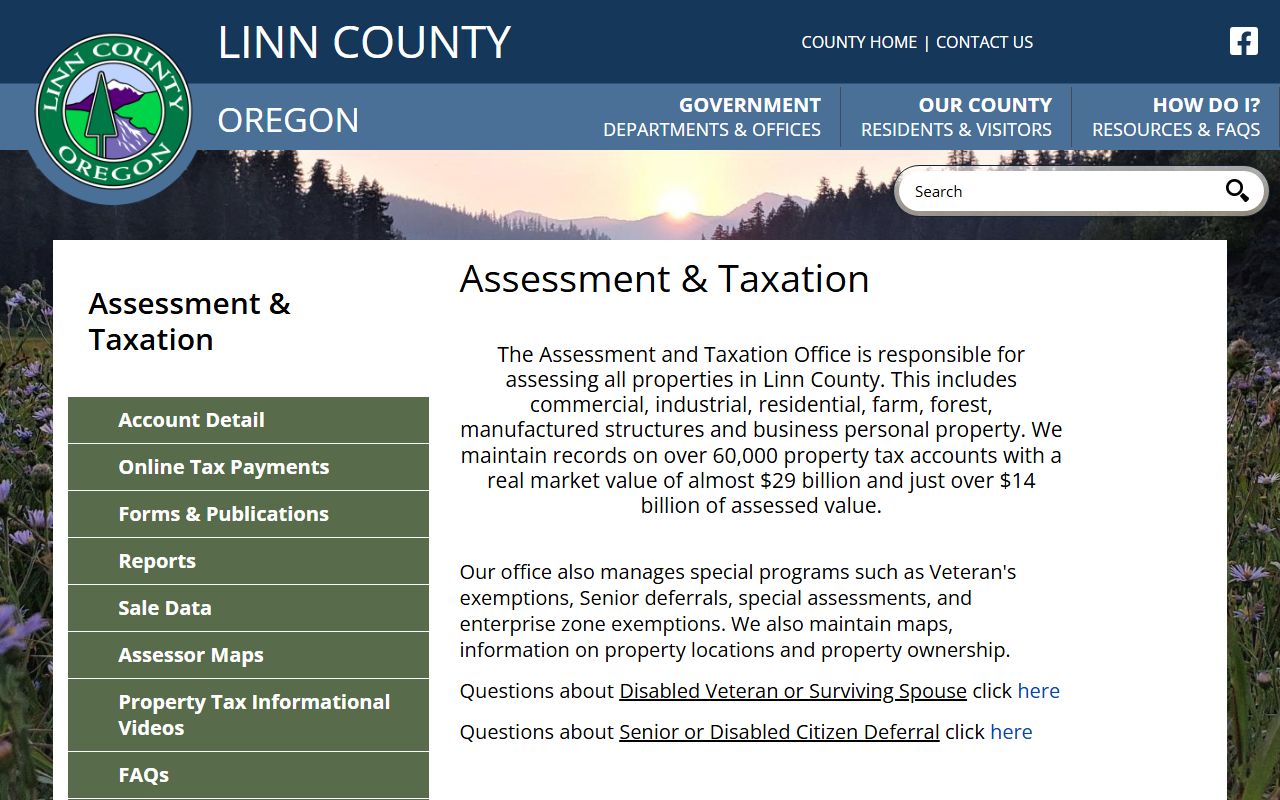
This tool lets you check assessed values, tax data, and ownership records for any parcel in Linn County.
Linn County Voter Registration Directory
The Linn County Clerk Elections office manages all voter registration and election services. Oregon uses a vote-by-mail system, so every registered voter in Linn County receives a ballot at home before each election. The clerk keeps a list of all registered voters with names, addresses, and party affiliation. This data is part of the public record under ORS Chapter 247.
Oregon's automatic voter registration program adds people to the rolls when they interact with the DMV. The Brennan Center tracks how this program works. It has increased registration rates statewide. In Linn County, the clerk verifies each registration and keeps the rolls clean. You can check your own status or look up voter data through the Oregon Secretary of State Elections page. Voter records help confirm a person's current address and are a useful part of the Linn County residents directory.
Note: Voter registration data in Linn County does not include Social Security numbers, birth dates, or other restricted information.
Linn County Deed and Recording Records
The Linn County Recorder files deeds, mortgages, liens, and marriage licenses. Each document is stamped with a date and becomes part of the permanent public record. Deed records trace who has owned a parcel over time. They form a chain of title that stretches back decades in many cases. If you want to verify ownership of land in Linn County, the recorder's office is the place to go.
Mortgage records are also filed here. They show the lender, the borrower, and the loan terms. When a loan is paid off, a satisfaction or reconveyance document is recorded. Liens from unpaid taxes, court judgments, or other debts also appear in these files. Marriage licenses are issued by the county clerk and recorded after the ceremony takes place. All of these records are open to the public in Linn County.
The Linn County Surveyor keeps survey records and maps. These show property boundaries, lot lines, and plat layouts. If you need to know the exact dimensions of a parcel, survey records are the best source. They pair well with deed records for a complete picture of any property in Linn County.
Note: The recorder charges a per-page fee for copies of recorded documents in Linn County.
Search Linn County Court Records
The Linn County Circuit Court hears civil, criminal, family, and probate cases. All filings become public unless sealed by a judge. You can visit the courthouse in Albany to view files or use the Oregon eCourt system online. Court records include complaints, motions, orders, and judgments. They show the legal history of disputes, charges, and family matters in Linn County.
Civil cases in Linn County deal with money claims, property disputes, and contract issues. Criminal cases track charges, pleas, and sentences. Family cases cover dissolution, custody, and child support. Probate cases involve estates and wills. Each type of case adds to the public record. Thousands of cases move through the Linn County court each year.
The Linn County Sheriff runs the county jail and handles patrols across the county. Booking records and arrest data are generally public. The sheriff also serves court papers, which is part of the legal process for many cases filed in Linn County.
Linn County Vital Records Access
Birth and death records in Linn County are managed by the county health department. You can request copies at the Linn County Vital Records office in Albany. The Oregon Health Authority also issues certified copies at the state level. Under Oregon law, birth records are restricted for 100 years, and death records for 50 years. Only eligible applicants can get certified copies during those periods.
Marriage records in Linn County are filed with the county clerk. These show the names of both parties, the date, and the location of the ceremony. Divorce records come from the Linn County Circuit Court. You can search for dissolution cases by name or case number at the courthouse. These vital records form a core part of the Linn County residents directory for anyone doing family research or confirming personal data.
How to Search Linn County Records
Begin with what you know. A name search in the property records is often the fastest way to find a person in Linn County. If you have an address, search by location to find the current owner. Voter records can confirm where someone lives. Court records reveal legal history. Each tool gives you a different piece of the picture. Here are the main types of records you can search in Linn County:
- Property ownership and tax values
- Voter registration data
- Deed and mortgage filings
- Court case records
- Birth, death, and marriage certificates
- Survey maps and plat records
Most Linn County offices are open on weekdays. Online tools run all day. If you hit a dead end with one record type, try another. A person who does not own property may still appear in voter rolls or court files. The Linn County residents directory is most useful when you combine multiple sources to build a full picture.
Oregon Public Records Law and Linn County
ORS 192.314 requires that public records be open to inspection by any person. Linn County follows this law. When you submit a request, the county must respond within a reasonable time. Some records are exempt, such as certain medical files and sealed court cases. But most government records in Linn County are available for viewing.
The Oregon Blue Book lists every county and its offices. It is a helpful reference for understanding Linn County government. For property tax data at the state level, the Oregon Department of Revenue offers tools that apply to Linn County and all other Oregon counties. These state resources complement the Linn County residents directory when you need broader context.
Cities in Linn County
Linn County includes Albany and Lebanon, among other towns. Albany is the county seat and the largest city. Lebanon lies to the east along the South Santiam River. Both cities rely on county offices for property, voter, and court records.
Other communities in Linn County include Sweet Home, Harrisburg, and Brownsville. All county records are managed from the offices in Albany.
Nearby Counties
Linn County borders Lane County to the south, Marion County to the north, and Polk County to the west. If you are unsure which county holds the records you need, check the property address. County lines determine which assessor, clerk, and court office has jurisdiction over a given location.